- NATURAL 20
- Posts
- The "WTF" Moment: GPT-5.2 Cracks Unsolved Math
The "WTF" Moment: GPT-5.2 Cracks Unsolved Math
PLUS: Anthropic Enters the Hospital with "Claude for Healthcare", OpenAI Buys a Medical App for $100 Million and more.

Wes Roth
January 13, 2026
In partnership with


What makes a great ad in 2026?
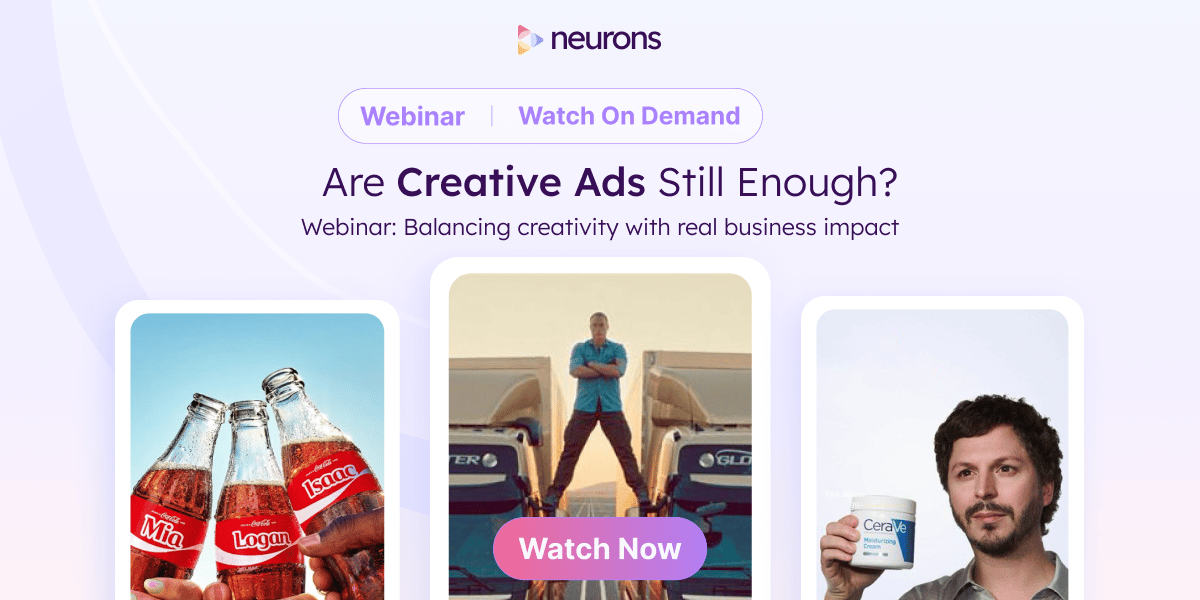
If you want to know the core principles of high-performing advertising in 2026, join our educational webinar with award-winning creative strategist Babak Behrad and Neurons CEO & Founder Thomas Z. Ramsøy.
They’ll show you how standout campaigns capture attention, build memory, and anchor brands. You’ll walk away with clear, practical rules to apply to your next campaign.
You’ll learn how to:
Apply neuroscientific principles to every campaign
Build powerful branding moments into your ads
Make your ads feel relevant to your audience
Master the art of high-impact campaigns in an era of AI-generated noise and declining attention spans
Hey! quick one today, but it’s a big day in “AI quietly rewires the world” news.
Today:
The "WTF" Moment: GPT-5.2 Cracks Unsolved Math
Apple & Google Team Up to Reboot Siri
Claude Can Now Control Your Desktop Files
Nvidia Drops $1 Billion on AI Drug Discovery
Anthropic Enters the Hospital with "Claude for Healthcare"
OpenAI Buys a Medical App for $100 Million
we just arrived at the "WTF" moment in AI
In early 2026, AI models began solving long-unsolved math problems once thought far beyond machine reach. GPT-5.2 Pro and similar models tackled Paul Erdős’s famous unsolved problems—complex puzzles that had resisted human attempts for decades. With verification from top mathematicians like Terence Tao, this marks a real shift. AI isn’t just helping, it’s discovering.
These aren't copied solutions; they're novel, creative breakthroughs. Even more powerful, AI can now rewrite, refine, and formalize proofs instantly like Photoshop for math. We're entering a new era where intelligence becomes cheap, fast, and massively scalable. The implications will shake every industry.
Apple and Google just struck a multi-year deal to use Gemini models for a revamped Siri and other “Apple Intelligence” features coming later this year. The wild part isn’t just the tech — it’s the distribution: Apple has 2+ billion active devices, so this is basically Google getting a front-row seat inside the most valuable consumer hardware ecosystem on earth.
A couple details I’m watching:
Apple had already integrated ChatGPT for opt-in “hard questions,” but Gemini looks like it’s becoming the default intelligence layer behind the Siri upgrade.
Google/Apple emphasized the usual privacy line: Apple Intelligence still runs on-device + via Private Cloud Compute (but now with Gemini in the mix).
Siri isn’t just getting “smarter.” It’s getting a new brain supplier and that changes the competitive map overnight.
Nvidia and Eli Lilly said they’ll spend $1 billion over five years on a joint research lab in the San Francisco Bay Area, aimed at accelerating drug discovery/development using Nvidia’s newest Vera Rubin generation AI chips. They’ll colocate teams, and the exact location is expected to be announced in March.
What makes this feel different from the usual “AI will help pharma” headlines is the scale + the pairing: Nvidia isn’t just selling chips, it’s showing up with models/software and building the lab alongside a pharma heavyweight.
Anthropic dropped a research preview called Cowork: you give Claude access to a folder on your computer, and it can read/edit/create files there more like delegating to a teammate than chatting. It can plan work, execute step-by-step, and keep you looped in as it goes.
A few practical notes:
It’s macOS app + Claude Max subscribers for now (with Windows and cross-device sync mentioned as future improvements).
Anthropic is also blunt about the risks: destructive actions are possible if instructions are unclear, and prompt injection is still a real “agent safety” problem.
If you’ve been waiting for “agents” to feel less like a demo and more like a workflow… this is another step in that direction.
🧠RESEARCH
This new system teaches AI to pinpoint exactly where a photo was taken by consulting digital maps, much like a human would. Instead of just guessing based on visual memory, the model actively verifies landmarks against map data. This "agent-in-the-loop" approach significantly reduces errors and beats current top-tier models at location spotting.
Researchers discovered that the best AI reasoning looks like stable chemical molecules. "Deep thinking" acts like a strong bond, while "self-correction" functions as a flexible connection holding the logic together. A new training method, Mole-Syn, uses this chemistry-inspired blueprint to help models solve complex problems without losing their train of thought.
To stop AI from making up facts, this paper introduces a stricter training system called CaRR. Instead of just grading the final answer, it rewards the model for proving its work with correct citations and solid evidence chains. This forces the AI to be thorough, preventing lazy shortcuts and "hallucinated" information.
🛠️TOP TOOLS
Each listing includes a hands-on tutorial so you can get started right away, whether you’re a beginner or a pro.
Brandmark AI – AI Logo Design Tool - browser‑based AI logo maker that generates logos and ready‑to‑use brand assets—business cards, social media graphics, presentations, animations, and even one‑page sites.
Buddy GPT – AI Assistant on WhatsApp - a conversational “answer engine” you can chat with on WhatsApp, Telegram, SMS, or the web.
Buffer AI – AI Tools For Social Media - AI writing aid built into Buffer’s social media platform.
📲SOCIAL MEDIA
🗞️MORE NEWS
Anthropic Launches Medical AI Features Anthropic has updated its Claude AI to securely analyze medical records and help patients understand their health data. The new "Claude for Healthcare" feature connects with apps like Apple Health to summarize test results and identify trends in your fitness. The company guarantees that this sensitive private information will never be used to train their future AI models.
OpenAI Buys Torch Health for $100 Million OpenAI has acquired the startup Torch Health to rapidly expand its new medical capabilities. Torch’s technology is designed to pull together a patient’s scattered records from different doctors and labs into one easy-to-read view. This purchase will power the upcoming "ChatGPT Health" tool, allowing users to manage their entire medical history in a single conversation.
Meta Announces Massive Power Grid Plan Mark Zuckerberg unveiled "Meta Compute," a huge initiative to build the physical energy systems needed for the next generation of AI. The company plans to develop tens of gigawatts of power infrastructure over the coming decade to feed their energy-hungry technology. This project ensures Meta will have the electricity and processing capacity required to run future artificial intelligence models.
Trump Nears Chip Deal with Taiwan The Trump administration is reportedly close to a trade agreement that would lower taxes on Taiwanese imports in exchange for a major manufacturing commitment. The deal would require chip giant TSMC to build five new factories in Arizona to produce the advanced computer chips that power modern AI. This move aims to secure the supply of these essential electronic brains within the United States.
DeepSeek Founder’s Fund Surges The investment fund run by the founder of Chinese AI startup DeepSeek reported massive profits of over 50% last year. These earnings from automated stock trading provide a personal "war chest" to fund his AI development without needing help from outside investors. This financial independence allows the company to aggressively compete with American tech giants in the race to build smarter models.
UK Regulators Investigate X Over Grok The British media watchdog Ofcom has launched a formal investigation into Elon Musk's social media platform, X. Authorities are examining whether the company failed to stop its AI tool, Grok, from being used to generate illegal, fake sexual images of people. If found guilty of violating online safety laws, the platform could face heavy fines or even be blocked in the United Kingdom.
What'd you think of today's edition? |
Reply