- NATURAL 20
- Posts
- OpenAI’s Early Strike on Google
OpenAI’s Early Strike on Google
PLUS: 10 Breakthroughs That Feel Like Sci-Fi, Yann LeCun Taps Europe’s Talent to Build the Anti-Chatbot AI and more.

Wes Roth
December 08, 2025
In partnership with


Go from AI overwhelmed to AI savvy professional

AI keeps coming up at work, but you still don't get it?
That's exactly why 1M+ professionals working at Google, Meta, and OpenAI read Superhuman AI daily.
Here's what you get:
Daily AI news that matters for your career - Filtered from 1000s of sources so you know what affects your industry.
Step-by-step tutorials you can use immediately - Real prompts and workflows that solve actual business problems.
New AI tools tested and reviewed - We try everything to deliver tools that drive real results.
All in just 3 minutes a day
Hey everyone,
It’s been a wild week in the world of AI—honestly, when is it not? But the last few days, in particular, have felt like the ground is shifting under our feet again. I’ve been glued to my feeds, trying to make sense of the noise, and I wanted to break down the three biggest stories for you.
Today:
OpenAI’s Early Strike on Google
Meta’s AI Newswire
NYT vs. Perplexity
10 Breakthroughs That Feel Like Sci-Fi
Yann LeCun Taps Europe’s Talent to Build the Anti-Chatbot AI
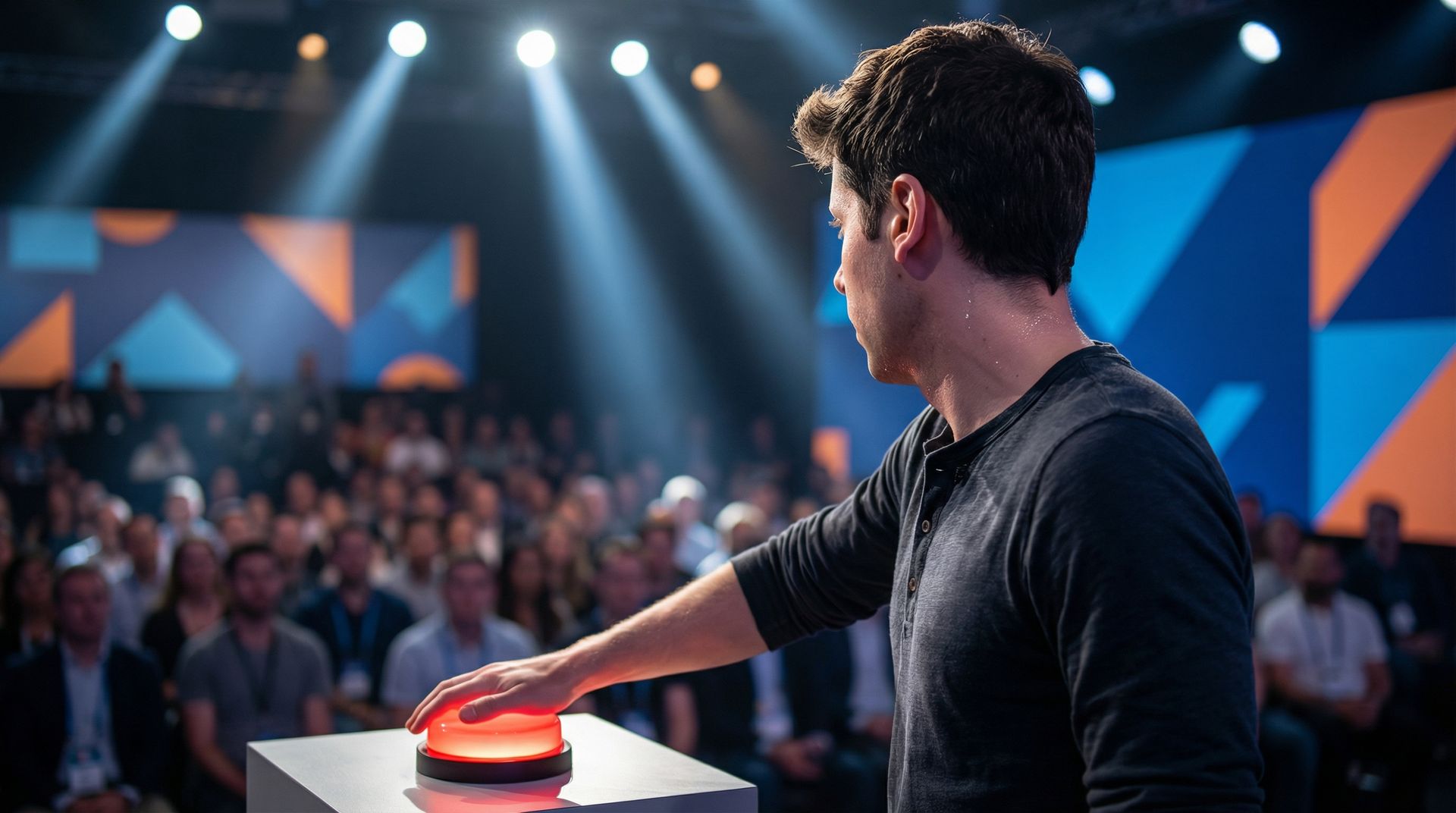
The biggest story right now is the sheer panic—or let's call it "extreme urgency"—coming out of OpenAI. After Google dropped Gemini 3 last month (which, let’s be honest, absolutely crushed the leaderboards), OpenAI has been feeling the heat.
Reports are flying that Sam Altman has declared an internal "Code Red." The team has reportedly paused other projects to focus entirely on shipping GPT-5.2, which rumors suggest could drop as early as this Tuesday, December 9th.
This isn’t just a normal update. It sounds like a desperate move to reclaim the throne. Gemini 3 has been getting praise from everyone—even Elon Musk—and OpenAI's "Code Red" directive specifically targets improving speed, reasoning, and reliability to close that gap. If you thought the model wars were slowing down, you were wrong. We are back in the races.
While OpenAI is fighting for brainpower, Meta is fighting for content. On Friday, Meta announced a massive slate of deals with major news publishers, including CNN, Fox News, USA Today, and Le Monde.
This is a fascinating pivot. Remember how Llama 4 landed with a bit of a thud earlier this year? It seems Meta is trying to recover by ensuring their AI can provide real-time, verified news—something the current models struggle with. By signing these multi-year deals, Meta AI will be able to link directly to articles and provide up-to-the-minute reporting without getting sued (more on that in a second).
It’s a smart, if necessary, move. If they can’t win on raw reasoning power, winning on trust and access to real-time events is a solid Plan B.
Speaking of getting sued, the other big shoe to drop on Friday was The New York Times filing a lawsuit against Perplexity AI.
This feels like the sequel to the OpenAI lawsuit, but with a twist. The NYT alleges that Perplexity isn’t just training on their data, but actively acting as a substitute for it—generating summaries that remove the need for users to click through to the actual article. They also threw in a claim about "hallucinations," accusing Perplexity of fabricating information and falsely attributing it to the Times, which damages their brand.
This is critical because Perplexity relies heavily on RAG (Retrieval-Augmented Generation)—fetching live data to answer questions. If courts rule that this specific mechanism violates copyright, it could break the business model of search-based AI entirely.
🧠RESEARCH
This paper presents "Live Avatar," a system that creates talking digital faces from live audio instantly. It uses a clever method to split work across multiple computer chips for speed. A unique memory feature keeps the face looking consistent for hours, preventing the glitches common in other video-generation tools.
DAComp is a new test designed to see how well AI handles complex data jobs. It challenges computers to build messy data systems and solve open-ended business problems. The study reveals that even the best current AIs struggle significantly, showing they aren't yet ready to fully manage enterprise data.
Nex-N1 is a new AI agent trained in a custom, ever-changing digital environment. Instead of simply copying human answers, it learns by making decisions to earn rewards in diverse scenarios. This training method allows it to beat other free AI models on hard tasks like writing code and solving logic puzzles.
🛠️TOP TOOLS
Each listing includes a hands-on tutorial so you can get started right away, whether you’re a beginner or a pro.
AnthemScore – Music AI for Your PC - This tool is designed for musicians, composers, and music educators who need to transcribe audio recordings into sheet music.
Antimetal – AI-Powered Cloud Cost Optimization - This platform serves startups and enterprises running on AWS who want to lower their cloud bills without manual engineering effort.
AnySummary – AI Summarizer - This application is for students, researchers, and professionals who need to digest large amounts of information quickly.
📲SOCIAL MEDIA
🗞️MORE NEWS
Yann LeCun’s European Startup A top AI scientist is leaving his role at Meta to launch a new company in Paris focused on teaching computers to understand the physical world. Unlike today's chatbots that only predict text, his startup aims to build "world models" that grasp reality and cause-and-effect relationships. The venture is supported by his former employer and seeks to tap into Europe's deep pool of engineering talent.
Microsoft’s 10 Scientific Breakthroughs Microsoft researchers have unveiled ten major inventions, ranging from tools that design new medicines to eco-friendly cement made from seaweed. They also created a super-fast weather prediction system and a new method to detect cancer using heat maps from medical scans. These advances use AI to solve hard problems in health and sustainability much faster than traditional computers ever could.
Meta Acquires Limitless The parent company of Facebook has bought Limitless, a startup famous for making a wearable pendant that records and remembers your conversations. This deal allows the tech giant to integrate "perfect memory" features into its own smart glasses and devices. While the startup will stop selling its own hardware, its technology will help build future personal assistants that know everything you’ve heard and said.
Google Workspace Young Leaders Survey A new study reveals that young professionals are eagerly adopting AI tools to accelerate their careers and boost their confidence at work. These workers, aged 22 to 39, are acting as "AI architects" by actively customizing the technology to fit their personal work styles. They prefer smart assistants that learn their specific preferences rather than providing generic, one-size-fits-all answers.
NYT: The College AI Boom College students are rushing to major in artificial intelligence and computer science, ignoring warnings about a tough job market for new graduates. Universities are responding to this explosion in interest by creating entirely new departments dedicated to teaching students how to build smart systems. Despite fears that AI might write code better than humans, students still view these technical skills as their golden ticket to a successful future.
Gizmodo: Laptop Prices Skyrocketing The cost of laptops is about to jump by up to twenty percent because the essential memory chips they use are in short supply. Manufacturers are diverting these parts to massive data centers that power AI, leaving fewer available for regular consumer computers. Experts warn that this shortage is severe and will force major brands like Dell and Lenovo to raise prices immediately.
What'd you think of today's edition? |
Reply