- NATURAL 20
- Posts
- OpenAI Quietly Drops GPT-5.2 Inside "Prism"
OpenAI Quietly Drops GPT-5.2 Inside "Prism"
PLUS: DeepSeek-OCR-2: The New King of Document Reading, Anthropic Raises $20 Billion to Fight OpenAI and more.

Wes Roth
January 28, 2026
In partnership with


See every move your competitors make.
Get unlimited access to the world’s top-performing Facebook ads — and the data behind them. Gethookd gives you a library of 38+ million winning ads so you can reverse-engineer what’s working right now. Instantly see your competitors’ best creatives, hooks, and offers in one place.
Spend less time guessing and more time scaling.
Start your 14-day free trial and start creating ads that actually convert.
Hey, quick note before we dive in: this week’s updates all point in the same direction.
AI isn’t just getting “smarter.”
It’s getting more operational — like it can split work up, check itself, and actually finish tasks the way a small team would
Today:
OpenAI Quietly Drops GPT-5.2 Inside "Prism"
Google’s Gemini 3 Flash Can Now "Zoom" into Images
Kimi k2.5 Unleashes a Swarm of 100 Agents
DeepSeek-OCR-2: The New King of Document Reading
Anthropic Raises $20 Billion to Fight OpenAI
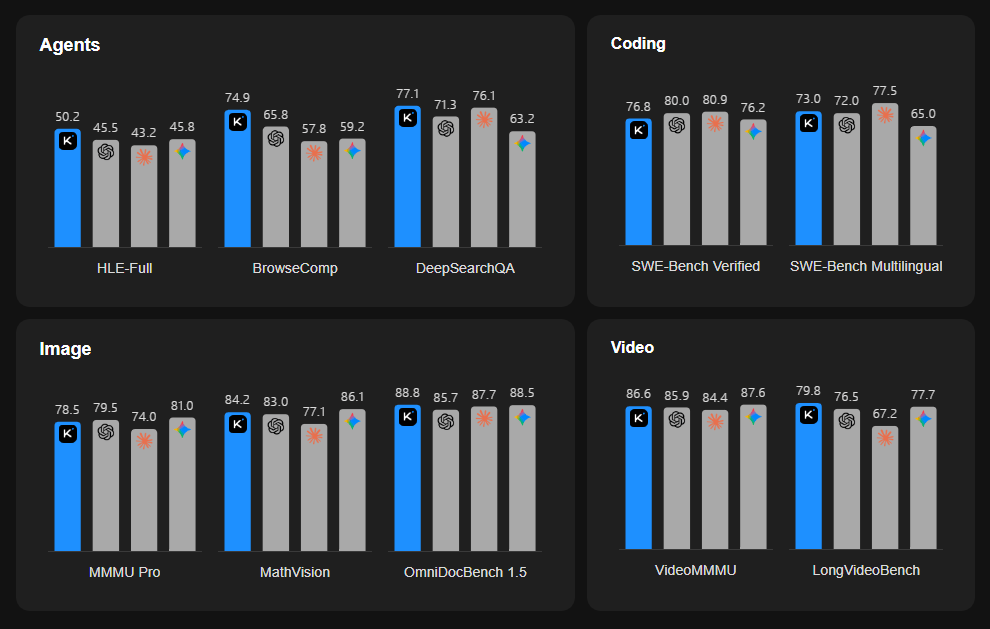
Kimi just put a big flag in the ground: swarm-style agents that can break work into parallel streams, then merge the results back together.
They’re calling it K2.5 Agent Swarm (Beta), and the headline detail is wild: it can self-direct up to 100 sub-agents across up to 1,500 coordinated steps, trained with something they call Parallel-Agent Reinforcement Learning (PARL) — without hand-crafted roles or predefined workflows.
Two things I’m watching here:
This is the clearest “AI project manager + AI specialists” framing I’ve seen in a single product.
They’re also positioning K2.5 as strong at coding (especially front-end) and “coding with vision” (using images/video to guide code + debugging).
If this holds up in real use, it changes how you assign work to AI. You stop writing one perfect prompt… and start giving it a goal, then letting it delegate.
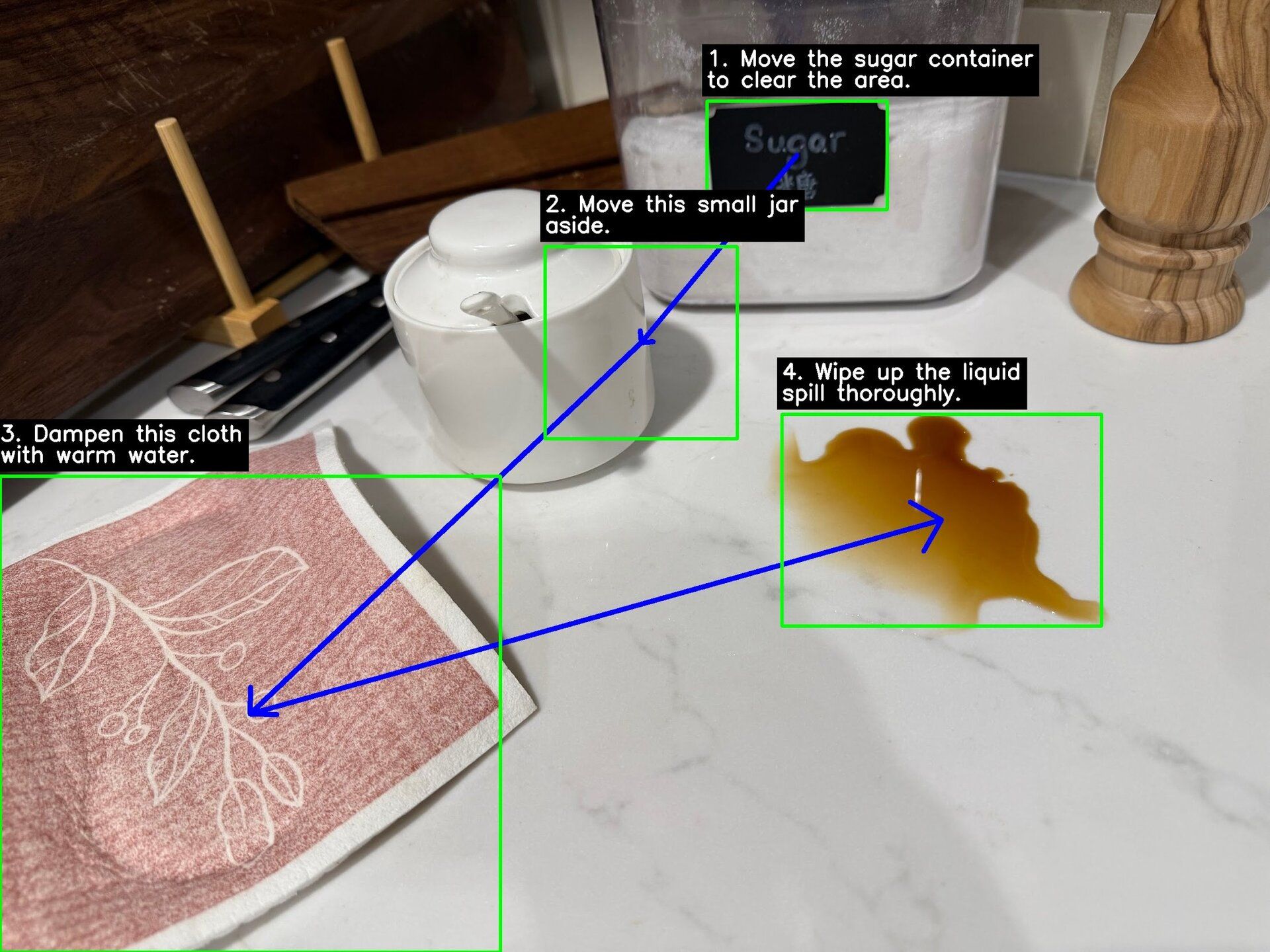
Google’s post is about a new capability in Gemini 3 Flash called Agentic Vision, and it’s exactly the fix people have been begging for in visual AI:
Instead of seeing an image once and guessing, the model can run a Think → Act → Observe loop, where it writes and executes Python to zoom, crop, rotate, annotate, count, and calculate, then uses those transformed images as evidence for the final answer.
Google claims that enabling code execution with Gemini 3 Flash gives a 5–10% quality boost across most vision benchmarks.
It’s also already available via the Gemini API in Google AI Studio and Vertex AI, and is starting to roll out in the Gemini app (you select “Thinking” and enable “Code Execution” under Tools).
Why this matters:
This is how you get vision models to stop bluffing.
When the model can literally draw boxes on what it counted, or zoom in on the street sign it read, you get answers that feel more like “checked work” than vibes.
This one is less flashy than swarms and agentic vision, but it’s quietly powerful if you write papers, reports, or anything technical.
OpenAI introduced Prism, a free, LaTeX-native workspace that integrates GPT-5.2 directly into scientific writing and collaboration.
A few details that jumped out:
Unlimited collaborators in a single cloud LaTeX workspace (real-time editing + previews).
AI-assisted proofreading, citations, and literature search, designed to be project-aware across drafts and revisions.
Built-in workflow helpers like citation management and Zotero sync, plus automation for formatting/editing.
My take: this is OpenAI trying to make the “AI + writing” experience feel less like copy/paste into a chatbot, and more like a native part of the tool you already live in.
🧠RESEARCH
This paper explores using AI to fix messy data, moving from strict rules to flexible, conversation-based commands. It reviews tools that clean, combine, and improve datasets for better analysis. The authors warn about high costs and AI making up facts, while proposing a future where these systems work automatically at a large scale.
Researchers created a new tool that turns simple dialogue into long, movie-quality videos. One AI "writer" creates a detailed script, while a second AI "director" films the scenes. This method ensures the video actually matches the story and flows smoothly, solving the common problem of AI videos becoming confusing over time.
To help AI solve very hard math problems, this team built a system called SOAR where one computer program acts as a teacher for another. The "teacher" creates practice questions just hard enough to help the "student" improve. This allows the AI to get smarter without needing humans to provide new answers.
🛠️TOP TOOLS
Each listing includes a hands-on tutorial so you can get started right away, whether you’re a beginner or a pro.
ChatCSV – Chat With Your Spreadsheets - AI assistant for analyzing spreadsheet data.
chatd – Private, Local “Chat With Your Documents” - desktop app that lets you chat with files stored on your computer using a local large language model (Mistral‑7B by default) running via Ollama.
ChatFAI – AI Character Chat & Role‑Play - lets you chat with AI versions of fictional, historical, and original characters, or build your own.
📲SOCIAL MEDIA
🗞️MORE NEWS
DeepSeek-OCR-2: DeepSeek released a new tool that reads complex documents like math and tables step-by-step, just like a human. It compresses images to run faster without losing the tiny details needed for accuracy.
Anthropic Funding: Anthropic is raising $20 billion, doubling its original goal. Investors now value the company at $350 billion, eager to back the makers of Claude even if they also fund rival OpenAI.
Mistral Vibe 2.0: Mistral launched a new tool designed for all-day coding tasks. It uses "async agents"—digital helpers that work in the background—to handle complex programming jobs while you focus on other work.
Google AI Plus: Google introduced a cheaper "AI Plus" subscription. It adds smart writing tools to Docs and Gmail, includes a video creator named Flow, and lets you analyze more documents in NotebookLM.
Corning & Meta: Meta signed a $6 billion deal with Corning to buy massive amounts of fiber optic cable. This wiring is essential to handle the huge data speeds required by their future AI computers.
Mozilla’s Alliance: Mozilla is using its $1.4 billion savings to fund a coalition of open-source AI startups. They want to ensure powerful technology isn't controlled solely by giants like OpenAI and Anthropic.
OpenAI Whistleblowers: OpenAI released a new policy that protects employees who report safety dangers to the government. It explicitly forbids punishing workers for speaking up, addressing fears about corporate retaliation.
UK & Meta: The UK government partnered with Meta to build open-source AI tools for public services. They want to create their own systems for things like transport rather than relying on closed private companies.
Anthropic & UK: Anthropic is helping the UK government build a smart assistant for the GOV.UK website. The tool will guide citizens through services, starting with helping people find jobs and training.
What'd you think of today's edition? |
Reply