- NATURAL 20
- Posts
- OpenAI Launches GPT-5.2
OpenAI Launches GPT-5.2
PLUS: Disney and OpenAI Sign Deal, Google Introduces GenTabs and more.

Wes Roth
December 12, 2025
In partnership with


Learn how to make every AI investment count.
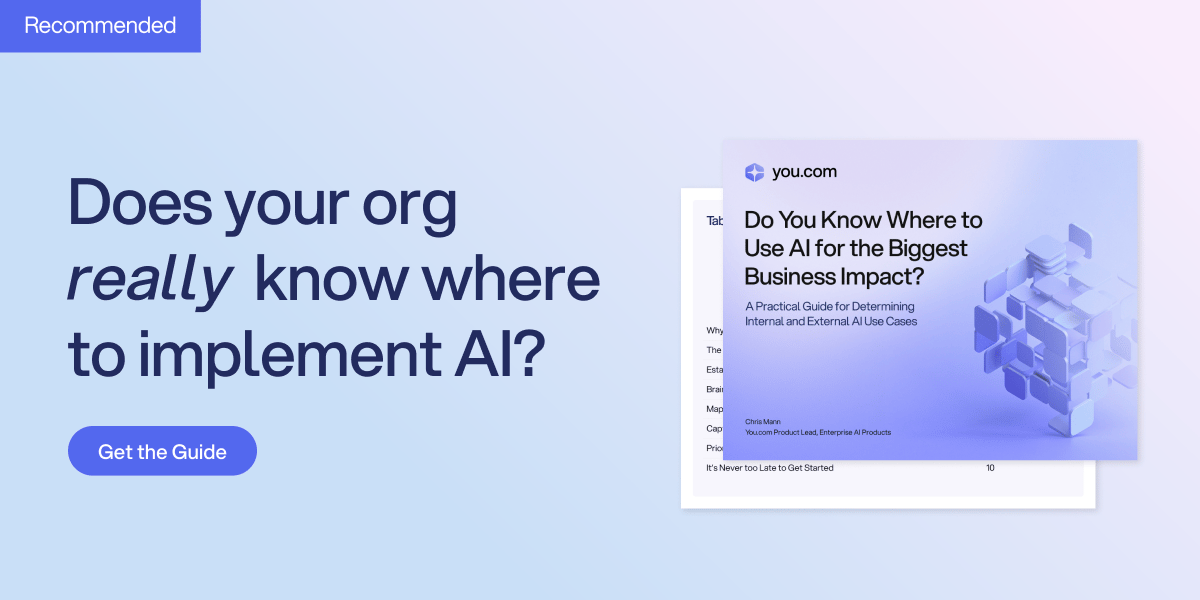
Successful AI transformation starts with deeply understanding your organization’s most critical use cases. We recommend this practical guide from You.com that walks through a proven framework to identify, prioritize, and document high-value AI opportunities.
In this AI Use Case Discovery Guide, you’ll learn how to:
Map internal workflows and customer journeys to pinpoint where AI can drive measurable ROI
Ask the right questions when it comes to AI use cases
Align cross-functional teams and stakeholders for a unified, scalable approach
Hey friend —
Big week. 😅
Let’s talk about what just dropped in AI, from “this might change your workday” down to “this might quietly reshape the map.”
Today:
OpenAI Launches GPT-5.2
Google Releases Deep Research Agent
xAI Partners with El Salvador
Disney and OpenAI Sign Deal
Google Introduces GenTabs

OpenAI just announced GPT-5.2, which they’re calling their most advanced frontier model for professional work and long-running agents.
In plain language: this one isn’t just about being “smarter” on a single prompt.
It’s about living inside your workflow — sitting in the background, doing long, messy, multi-step tasks without falling apart.
A few key vibes from the announcement:
OpenAI says ChatGPT Enterprise users already save ~40–60 minutes a day, and heavy users report 10+ hours a week saved.
GPT-5.2 is explicitly positioned as the model that should unlock even more economic value: think deeper research, more reliable agents, and fewer “sorry, I lost the thread” moments.
What this could mean for you:
For knowledge workers:
Expect better “end-to-end” help — not just answering a question, but planning, executing, and revising tasks like reports, strategy docs, and long research projects.For builders / devs:
Agents that can run longer, more complex workflows with fewer hacks: monitoring jobs, triaging tickets, managing content pipelines, or even coordinating other tools and services.For teams:
The pitch is basically: “Let GPT-5.2 handle the boring glue work so humans can focus on judgment, taste, and decisions.”
If you’ve already felt how much GPT-5.x or o-series models can compress a workday, GPT-5.2 is OpenAI saying: “Okay, now let’s do that at the frontier level, and for entire organizations.”
While OpenAI pushes on frontier models + agents, Google is leaning hard into “AI as a research partner.”
They just announced a Deep Research agent you can access through the Gemini API.
From the title alone, you can think of this as:
Not just “Gemini answers a question,” but “Gemini plans a little research project for you.”
Instead of a single response, a deep-research agent typically:
Breaks your question into smaller steps
Searches across sources
Reads and compares information
Then synthesizes everything into a clearer answer (ideally with some trace of where it got things)
Why this matters:
Higher expectations for “show your work.”
As “deep research” agents become normal, people will expect AI tools to dig, not just reply.Developers get a shortcut.
Instead of hand-rolling custom research loops (search → fetch → summarize → compare → refine), devs can tap into a pre-built agent through the Gemini API.The agent race is heating up.
OpenAI, Google, xAI, Anthropic — everyone’s trying to own the “AI that thinks for 30 minutes so you don’t have to” experience.
Google’s move here is basically: “We don’t just have a model, we have a researcher you can call from your app.”
If you’re someone who lives in articles, PDFs, and tabs, this is part of a bigger trend: AI shifting from “answer engine” to “research teammate that doesn’t get tired.”
In a shift from product releases to policy, Elon Musk’s xAI announced a partnership with the government of El Salvador.
They plan to deploy Grok to over 5,000 public schools, aiming to reach a million students. The goal is to create an adaptive tutoring system that personalizes education for every child.
While this is a fascinating experiment in AI-native education, it’s currently specific to one country. However, if they pull off a successful nationwide deployment, it could become the blueprint for how governments worldwide integrate AI into classrooms.
🧠RESEARCH
Researchers found a way to make AI write faster by generating whole blocks of text at once instead of just one word at a time. By recycling the "brains" of existing models rather than building new ones from scratch, this method speeds up performance without sacrificing quality or breaking the bank.
StereoWorld is a new AI tool that turns standard, flat videos into realistic 3D footage for VR headsets. By analyzing the depth and shape of objects in the video, it creates a convincing 3D effect without the visual errors and artifacts that usually plague these types of conversions.
HiF-VLA is a new system that helps robots handle long, complicated tasks without getting confused. Instead of just reacting to the immediate moment, the robot analyzes past movements and predicts future actions. This "foresight" allows it to complete multi-step jobs that usually trip up other machines.
🛠️TOP TOOLS
Each listing includes a hands-on tutorial so you can get started right away, whether you’re a beginner or a pro.
ArtGuru Face Swap: AI Face Swap Tool - browser‑based face‑swapping tool.
Artimator – AI Art Generator - browser-based AI art generator that turns text prompts into images.
Artiphoria – Digital Art Creation - web app for generating unique images in one click.
📲SOCIAL MEDIA
🗞️MORE NEWS
OpenAI and Disney Partnership Disney has signed a major deal with OpenAI that allows the video tool Sora to create clips using famous characters from Star Wars, Marvel, and Pixar. As part of this agreement, Disney is investing one billion dollars into OpenAI and plans to use their technology to build new entertainment products. This partnership lets fans generate their own short videos with beloved characters while promising to respect safety and creator rights.
Google GenTabs Google has introduced a new experimental feature called Disco that uses their advanced Gemini 3 artificial intelligence to organize your digital life. This tool takes your open browser tabs and chat history and turns them into custom mini-apps, which they call GenTabs, to help you manage specific projects. It aims to automatically convert messy web browsing into structured, useful tools that make your work easier.
DeepMind UK Automated Lab Google DeepMind is building a new laboratory in the UK where robots and artificial intelligence will work together to invent new materials. This facility will focus on discovering things like longer-lasting batteries and super-efficient energy conductors without needing as much human help. The project is a partnership with the British government designed to speed up important scientific breakthroughs.
Runway World Model Runway has released a new AI system designed to understand the laws of physics, allowing it to create highly realistic video simulations. They also updated their existing video tool to automatically generate sound effects and dialogue that perfectly match the action happening on screen. This update helps creators make complete, lifelike videos with natural movement and audio in a single step.
Opera Neon Browser Opera has released Neon, a new web browser designed entirely around artificial intelligence features that actively help you use the internet. It includes a smart assistant that can perform complex tasks for you, like planning trips or comparing products, directly within your open tabs. This browser focuses on privacy by running many of these smart features on your own computer rather than sending data to the cloud.
Disney vs. Google Legal Battle Disney has legally warned Google to stop its artificial intelligence tools from generating images of famous Disney characters. The entertainment giant claims Google’s software is copying their movies and cartoons on a massive scale without permission. This legal threat was sent just hours before Disney announced a friendly billion-dollar partnership with Google's rival, OpenAI.
What'd you think of today's edition? |
Reply