- NATURAL 20
- Posts
- Google Debuts DiffusionGemma for Blazing-Fast Text Generation
Google Debuts DiffusionGemma for Blazing-Fast Text Generation
PLUS: OpenAI Acquires Ona to Power Persistent AI Agents, Perplexity Rolls Out Automated Deep Research Tool and more.

Wes Roth
June 12, 2026
In partnership with


AI help, without the trust tax.
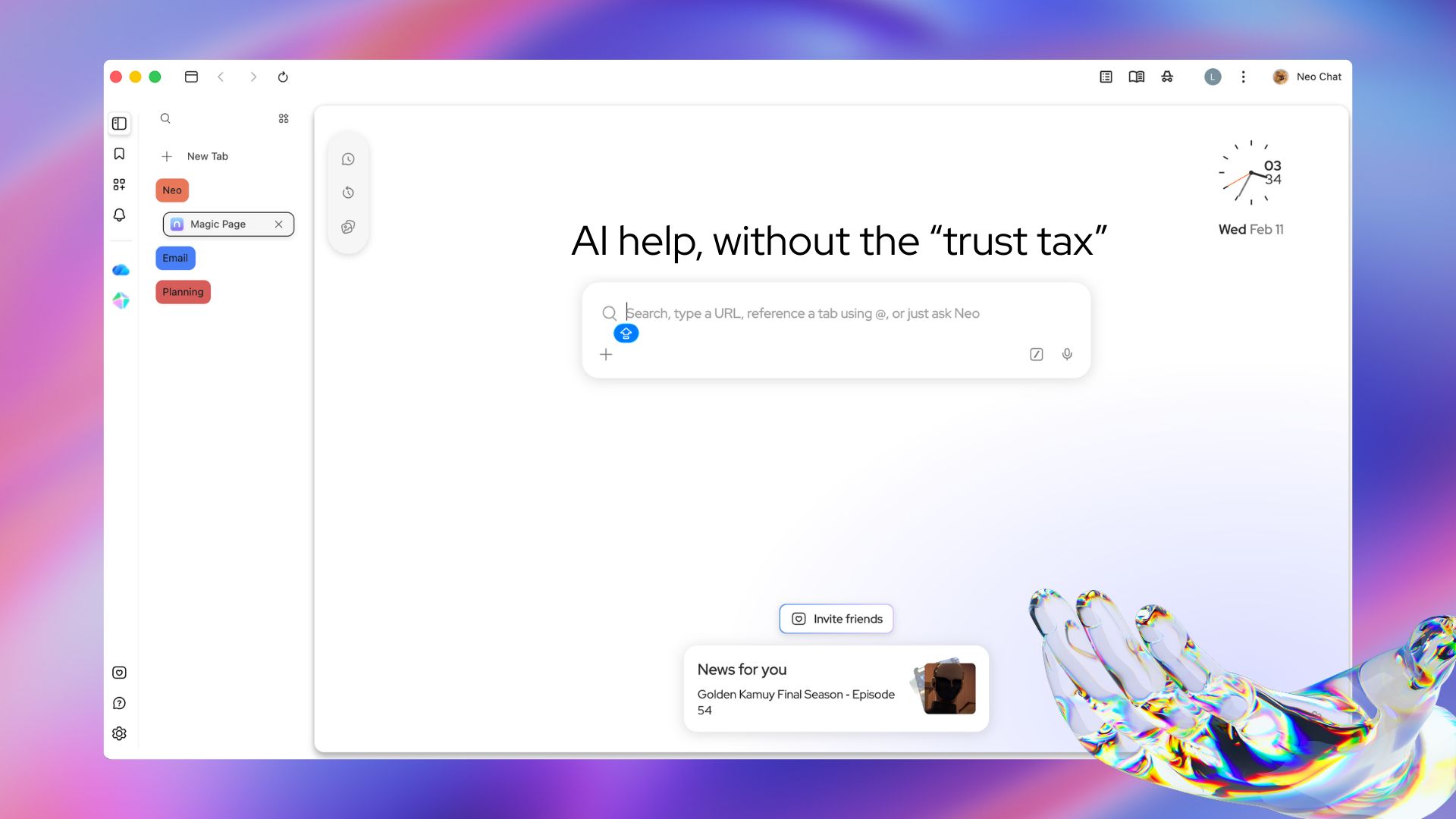
Most AI tools ask you to trade your data for intelligence. Norton Neo doesn't. It's the first safe AI-native browser built by Norton, and it gives you powerful built-in AI without handing your privacy over to get it. Search, summarize, and write with AI built directly into your browser. Your data stays yours. Your context stays private.
Built-in VPN, anti-fingerprinting, and ad blocking come standard. No add-ons. No setup. No compromises.
Fast. Safe. Intelligent. That's Neo.
Today:
Google Debuts DiffusionGemma for Blazing-Fast Text Generation
Bezos Launches $12B 'Artificial Engineer' Startup
Anthropic Scraps Hidden Safeguards for Claude Models
OpenAI Acquires Ona to Power Persistent AI Agents
Perplexity Rolls Out Automated Deep Research Tool

Google has introduced DiffusionGemma, an experimental 26-billion parameter open model released under an Apache 2.0 license. Instead of acting like a traditional "typewriter" that predicts text one word at a time, DiffusionGemma functions like a printing press, utilizing text diffusion to draft entire 256-token blocks simultaneously.
Important Details:
Blazing Speed: By shifting the bottleneck from memory bandwidth to compute power, the model generates text up to 4x faster on dedicated GPUs, reaching over 1,000 tokens per second on an NVIDIA H100 and 700+ on an RTX 5090.
Accessible Footprint: Built as a Mixture of Experts (MoE), it only activates 3.8B parameters during inference. When quantized, it fits comfortably inside the 18GB VRAM limits of high-end consumer GPUs.
Bi-directional Attention: Because it generates text in parallel blocks, every token can attend to all others. This makes it exceptionally capable at non-linear tasks that traditional models struggle with, such as code infilling, in-line editing, and even solving Sudoku puzzles.
The Trade-off: While standard Gemma 4 remains the go-to for maximum production quality, DiffusionGemma is built for developers prioritizing low-latency, interactive local workflows over cloud-based serving.
In an exclusive interview, Jeff Bezos and Vik Bajaj (a Stanford professor and former co-founder of Alphabet’s Verily) opened up about their new AI startup, Prometheus. The company recently emerged with a staggering $12 billion Series B funding round, valuing the venture at $41 billion.
Important Details:
AI for the Physical Economy: Quashing rumors that the startup is building robots, Bezos confirmed Prometheus is developing an "artificial general engineer." This system functions like a hyper-advanced version of CAD, designed to help human engineers design, invent, and manufacture physical objects much faster.
Massive Compute Needs: The bulk of the $12 billion raise will go directly toward securing scarce compute resources required for highly intensive data creation and model training.
Economic Impact: Bezos pushed back against AI pessimism, stating the technology will drive enough productivity to raise the standard of living—predicting it could eventually allow two-earner households to comfortably survive on a single income.
Regulation: Bezos advocated for "reasonable" government regulation applied at the application level (how tools are used), rather than restricting the underlying development of data centers and models.
Following swift community pushback, Anthropic’s developer relations team announced a major policy reversal regarding how Claude handles requests related to frontier LLM development.
Important Details:
Visible Fallbacks: Anthropic is removing the controversial "invisible safeguards" deployed in Claude Fable 5. Moving forward, any flagged request will visibly fall back to the Opus 4.8 model—matching the company's protocol for biological and cyber safety triggers.
API Transparency: Developers using the API will now receive explicit error messages detailing exactly why a request was refused.
Admitting the Misstep: The team explained that they initially utilized invisible safeguards because they can be targeted narrowly (preventing false positives) and deployed quickly. Because visible safeguards can be actively probed by users, they require more time to make robust. However, Anthropic apologized and admitted that sacrificing transparency for speed was the "wrong tradeoff."
🧠RESEARCH
ABot-Earth 0.5 is an AI tool that quickly turns flat satellite photos into highly realistic 3D maps. By studying real city layouts, it creates seamless virtual worlds in minutes. This low-cost, lifelike simulation helps train physical robots and drones safely in virtual spaces before they operate in the real world.
Retrospective Harness Optimization helps AI assistants improve by reviewing past mistakes. Rather than relying on human-graded tests, the AI replays difficult tasks, tries new solutions, and automatically upgrades its own tools. This self-taught method significantly boosts the AI’s success rate in solving complex software problems without outside help.
Large AI systems rely on "routers" to direct tasks to specialized internal networks. However, these routers often struggle to match tasks efficiently. A new mathematical approach perfectly aligns the router with its target network's core features. This simple fix makes training massive AI models much faster, stable, and accurate.
📲SOCIAL MEDIA
🗞️MORE NEWS
OpenAI Acquires Ona OpenAI is buying the startup Ona to give its AI coding tools a secure, permanent workspace on remote servers. This allows AI assistants to work safely on complex software projects over hours or days, even when the human user's computer is turned off.
Perplexity Deep Research Perplexity’s Deep Research tool acts like an automated investigator that explores the internet to answer complex questions. It reads dozens of websites, gathers facts, and writes a detailed report, saving humans hours of manual searching and reading.
Updates to Claude Managed Agents Anthropic updated its AI assistants so they can now run on automatic schedules and safely hold secret passwords in secure digital safes. This allows the AI to independently finish routine chores, like weekly data reports, without risking a company's sensitive information.
Claude for Apple Devices Software creators can now easily connect Claude to Apple devices like iPhones and MacBooks using Apple's built-in toolkits. This setup lets an app handle simple tasks locally, but automatically hands off harder jobs—like complex problem-solving—to Claude’s more powerful brain.
Xiaomi MiMo Code Xiaomi created MiMo Code, a free and publicly available AI programmer built to handle massive, long-term software projects without getting confused. It uses a clever "save point" system to remember past decisions and automatically double-checks its work to prevent small mistakes from snowballing into big problems.
Mastercard Agent Pay for Machines Mastercard launched a new system that lets artificial intelligence programs securely buy and sell services from each other at lightning speed. By enabling these continuous, fraction-of-a-cent payments, AI assistants can automatically negotiate and pay for digital needs without asking for human permission at every step.
Dario Amodei on AI Policy Anthropic’s CEO argues that AI is getting so smart so quickly that it requires strict safety testing enforced by the government, much like how airplanes are regulated. He also warns that AI will rapidly replace human jobs, urging leaders to invent new economic rules so everyone shares in the wealth created by this technology.
What'd you think of today's edition? |
Reply