- NATURAL 20
- Posts
- Elon Musk Announces "Terafab": A Trillion-Watt Chip Manufacturing Plan for Space
Elon Musk Announces "Terafab": A Trillion-Watt Chip Manufacturing Plan for Space
PLUS: Zuckerberg Builds a Virtual Co-CEO, Tencent Brings OpenClaw AI Assistant to Over a Billion WeChat Users and more.

Wes Roth
March 23, 2026
In partnership with

Here’s how I use Attio to run my day.

Attio is the AI CRM with conversational AI built directly into your workspace. Every morning, Ask Attio handles my prep:
Surfaces insights from calls and conversations across my entire CRM
Update records and create tasks without manual entry
Answers questions about deals, accounts, and customer signals that used to take hours to find
All in seconds. No searching, no switching tabs, no manual updates.
Ready to scale faster?
Today:
Elon Musk Announces "Terafab": A Trillion-Watt Chip Manufacturing Plan for Space
Pentagon Cements Palantir's "Maven" AI as a Core Defense System
Thiel Backs $2B AI Livestock Startup
Zuckerberg Builds a Virtual Co-CEO
Tencent Brings OpenClaw AI Assistant to Over a Billion WeChat Users
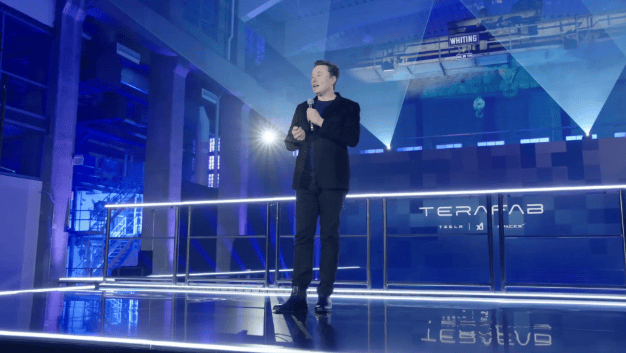
Elon Musk has never been one for understated announcements, but the unveiling of "Terafab" over the weekend in Austin represents a paradigm shift that fundamentally redefines the scale of artificial intelligence infrastructure.
Terafab is a $20 billion joint venture seamlessly weaving together the distinct capabilities of Tesla, xAI, and SpaceX. The stated objective is mind-bending: to manufacture dedicated AI, robotics, and data center chips capable of producing one terawatt—a trillion watts—of compute power annually.
To put that in perspective, a single terawatt is roughly equivalent to the total electricity consumption of several industrialized nations combined. What makes this initiative truly unprecedented, however, is the deployment strategy.
Musk explicitly laid out a roadmap where the vast majority of this compute infrastructure will not be bound to Earth, but deployed in space.
This solves one of the most pressing bottlenecks in the current AI boom: the catastrophic strain that massive data centers are placing on terrestrial power grids. By moving the hardware into orbit, Terafab intends to harness uninterrupted solar energy while leveraging the natural cooling properties of the space environment.
The logistical synergy here is a masterclass in vertical integration.
Tesla provides the advanced manufacturing and robotics expertise required to build the chips, memory, and packaging all under a single roof.
xAI brings the software architecture and the insatiable demand for next-generation training compute.
SpaceX, via its Starship platform, provides the heavy-lift capacity necessary to launch thousands of tons of server racks into orbit, where they will likely integrate with the existing Starlink constellation to beam zero-latency processing power back to Earth.
Musk framed this as "the most epic chip-building exercise in history" and a necessary step for a "galactic civilization." If successful, it wrests control of the AI hardware supply chain away from traditional foundries and fundamentally alters the geopolitical balance of technological power.
The U.S. military is permanently cementing artificial intelligence into its defense strategy.
According to a newly surfaced memo from Deputy Secretary of Defense Steve Feinberg, the Pentagon is officially adopting Palantir’s "Maven" AI system as a formal program of record.
This administrative move guarantees long-term funding and locks in the integration of Palantir's weapons-targeting technology across all military branches.
Maven utilizes vast amounts of sensor, drone, and satellite data to help commanders "detect, deter, and dominate" adversaries, marking a significant shift in modern battlefield intelligence.
In a major pivot from Silicon Valley software to physical agriculture, Peter Thiel’s Founders Fund is reportedly leading an investment round for Halter, a New Zealand-based startup.
The new funding values the company at an impressive $2 billion.
Halter's flagship product is a solar-powered AI collar for cattle, operating on a proprietary system they call the "Cowgorithm."
The smart collars use subtle audio cues to guide livestock, enabling farmers to implement entirely virtual fencing and move herds remotely via a digital interface.
🧠RESEARCH
Many artificial intelligence programs struggle to understand physical space. To fix this issue, researchers created VEGA-3D, a tool using video-generating AI to teach these programs about three-dimensional shapes and physical rules. This upgrade significantly improves how computers comprehend real-world scenes and handle objects, all without needing any extra human-created data.
Nemotron-Cascade 2 is a highly efficient artificial intelligence model that performs complex math and coding tasks as well as much larger systems. By using specialized training methods that divide tasks among smaller internal experts, it recently won top awards in major international programming competitions while requiring far less computing power.
Most digital assistants cannot learn new skills after they are built. MetaClaw solves this by creating a system that constantly learns from its own mistakes. It invents new ways to solve problems instantly, and then quietly updates its core programming during inactive hours, ensuring continuous improvement without interrupting the user.
📲SOCIAL MEDIA
🗞️MORE NEWS
Mark Zuckerberg Is Building an AI Agent to Help Him Be CEO Mark Zuckerberg is creating a personal artificial intelligence program to assist him with his duties as the chief executive of Meta. This digital helper speeds up his daily work by instantly finding information that would normally take hours of asking human employees to gather. The project is part of a larger push to give every worker similar tools, helping the massive company move faster and stay competitive.
Tencent Integrates WeChat with OpenClaw AI Agent Tencent has added a new artificial intelligence assistant directly into WeChat, which is China's most popular messaging app. This feature allows over a billion users to simply text the digital helper to perform everyday tasks like sending emails or moving computer files on their behalf. The update highlights a fierce race among large Chinese technology companies to build the best automated tools for both regular people and businesses.
OpenAI Is Building a Fully Automated Researcher OpenAI is directing its massive resources toward building an artificial intelligence system that can conduct complex scientific research completely on its own. Instead of just answering simple questions, this future program is being designed to read existing studies, invent new ideas, and run experiments without any human help. The company believes this automated scientist could eventually lead to major breakthroughs in difficult fields like medicine and physics by working infinitely faster than humans.
A New Milestone for Smart, Affordable Electricity Growth Google has announced a new plan to help stabilize local electricity networks by flexibly adjusting how much power its massive computer centers use. During times when the public needs a lot of electricity, the company will automatically pause complex background tasks to free up power for regular homes and businesses. This flexible sharing approach prevents sudden power outages and reduces the need to build expensive new power plants just to handle rare moments of high public demand.
What'd you think of today's edition? |
Reply