- NATURAL 20
- Posts
- ClawdBot: The Open-Source AI Assistant That Does Everything
ClawdBot: The Open-Source AI Assistant That Does Everything
PLUS: OpenAI Reportedly Launching ChatGPT Ads at Super Bowl-Level Prices, Nvidia Pours $2 Billion into CoreWeave to Build "AI Factories" and more.

Wes Roth
January 27, 2026
In partnership with


The headlines that actually moves markets

Tired of missing the trades that actually move markets?
Every weekday, you’ll get a 5-minute Elite Trade Club newsletter covering the top stories, market-moving headlines, and the hottest stocks — delivered before the opening bell.
Whether you’re a casual trader or a serious investor, it’s everything you need to know before making your next move.
Join 200K+ traders who read our 5-minute premarket report to see which stocks are setting up for the day, what news is breaking, and where the smart money’s moving.
By joining, you’ll receive Elite Trade Club emails and select partner insights. See Privacy Policy.
Hey everyone,
I hope you’re having a great week so far. There’s been a flurry of AI announcements over the last 24 hours that I wanted to unpack for you—ranging from tools that will change how we work today, to digital twins of our planet, all the way down to the silicon making it all happen.
Today:
ClawdBot: The Open-Source AI Assistant That Does Everything
Microsoft Unveils Maia 200 Chip for Efficient AI Inference
NVIDIA Releases Open "Earth-2" Models for Climate Prediction
Claude Integrates Asana, Figma, and Slack as Interactive Apps
OpenAI Reportedly Launching ChatGPT Ads at Super Bowl-Level Prices
Nvidia Pours $2 Billion into CoreWeave to Build "AI Factories"
ClawdBot is out of control
Peter Steinberger, ex-retired engineer, launched ClawdBot, a powerful open-source AI assistant that acts like a 24/7 digital employee. It connects to your tools—email, calendar, files, smart devices—and can manage everything from food orders to coding tasks, even controlling lights or checking you in for flights. Built in TypeScript, it supports multiple agents, messaging platforms, and deep customization.
ClawdBot shows the emerging potential of personal AI agents, though it comes with real security risks. As Steinberger and others demo its vast capabilities, one thing is clear: single-person, billion-dollar AI-run companies are no longer science fiction—they're starting now.

Anthropic just added nine popular work tools (think Asana, Figma/FigJam, Slack, Canva, and more) as interactive apps that open directly inside Claude so you can view, poke around, and edit outputs without hopping between tabs.
What’s interesting here isn’t just “integrations.” It’s the format: these tools show up like little embedded workspaces in the conversation (visuals, charts, docs, design boards), which makes Claude feel less like a chatbot and more like a “work hub.”
A few specifics:
Asana (project management), Figma (FigJam diagrams), Canva (presentation design), Slack (drafting messages)
Plus Amplitude (analytics charts), Box (file search + previews), Clay (company research/outreach), Hex (data analysis with interactive charts), and monday.com (project management)
It’s built on Anthropic’s Model Context Protocol (MCP) “Apps”, positioned as an open standard for connecting external tools to AI apps
And Salesforce is planning to add Agentforce, Data 360, and Customer 360 apps later
Why this matters: this is the cleanest sign yet that “agents” won’t just be a hidden feature. They’ll be visible, clickable, and embedded in the same place you’re already talking to the model. If this works smoothly, switching costs drop hard: your project plan, your design board, your analytics, and your messages start living inside one AI workspace.
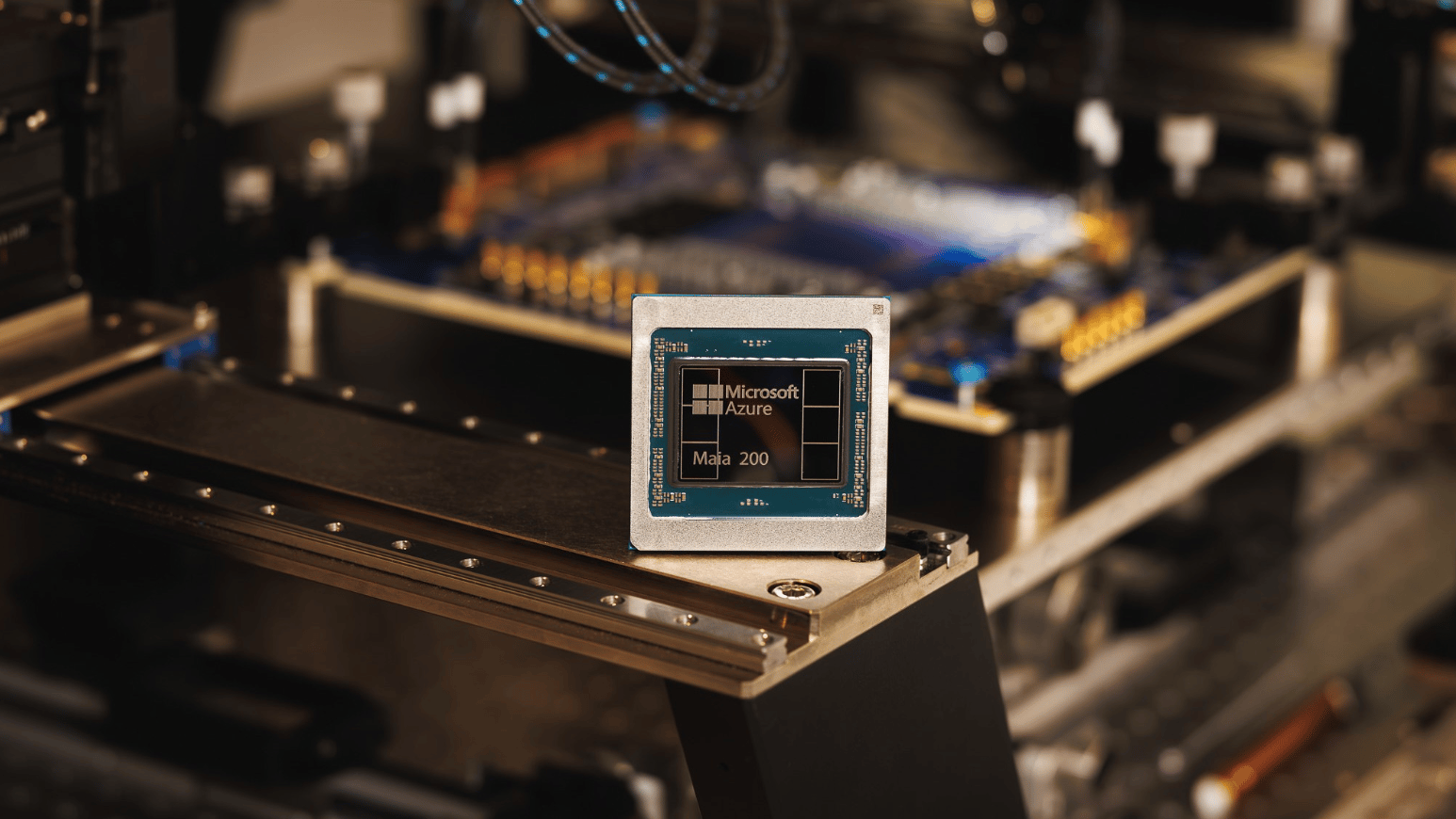
Microsoft introduced Maia 200, a first-party AI accelerator built specifically to make token generation (inference) cheaper and faster.
They’re making some very loud claims and backing it with very concrete specs:
Built on TSMC 3nm, with native FP8/FP4 tensor cores
A redesigned memory system: 216GB HBM3e, 7 TB/s bandwidth, plus 272MB on-chip SRAM
Per-chip performance targets: >10 petaFLOPS FP4 and >5 petaFLOPS FP8, in a 750W envelope
Microsoft says it’s 3× the FP4 performance of 3rd-gen Amazon Trainium, and FP8 above Google’s 7th-gen TPU (their comparison, not mine)
They also claim 30% better performance per dollar versus the latest hardware in their fleet
Deployment + ecosystem details matter too:
Already deployed in US Central (near Des Moines, Iowa), with US West 3 (near Phoenix, Arizona) next
Intended to serve multiple models, including OpenAI’s latest GPT-5.2 models for Microsoft Foundry and Microsoft 365 Copilot
They’re previewing a Maia SDK with PyTorch integration, a Triton compiler, an optimized kernel library, plus low-level access (and even a simulator/cost calculator mentioned in the post)
Why this matters: everyone talks about “model breakthroughs,” but the silent bottleneck is still the cost of running those models at scale. Maia 200 is Microsoft basically saying: we want control over inference economics, not just renting whatever’s available. If they really can improve performance-per-dollar at fleet scale, that changes what “default” AI features can be bundled into products.
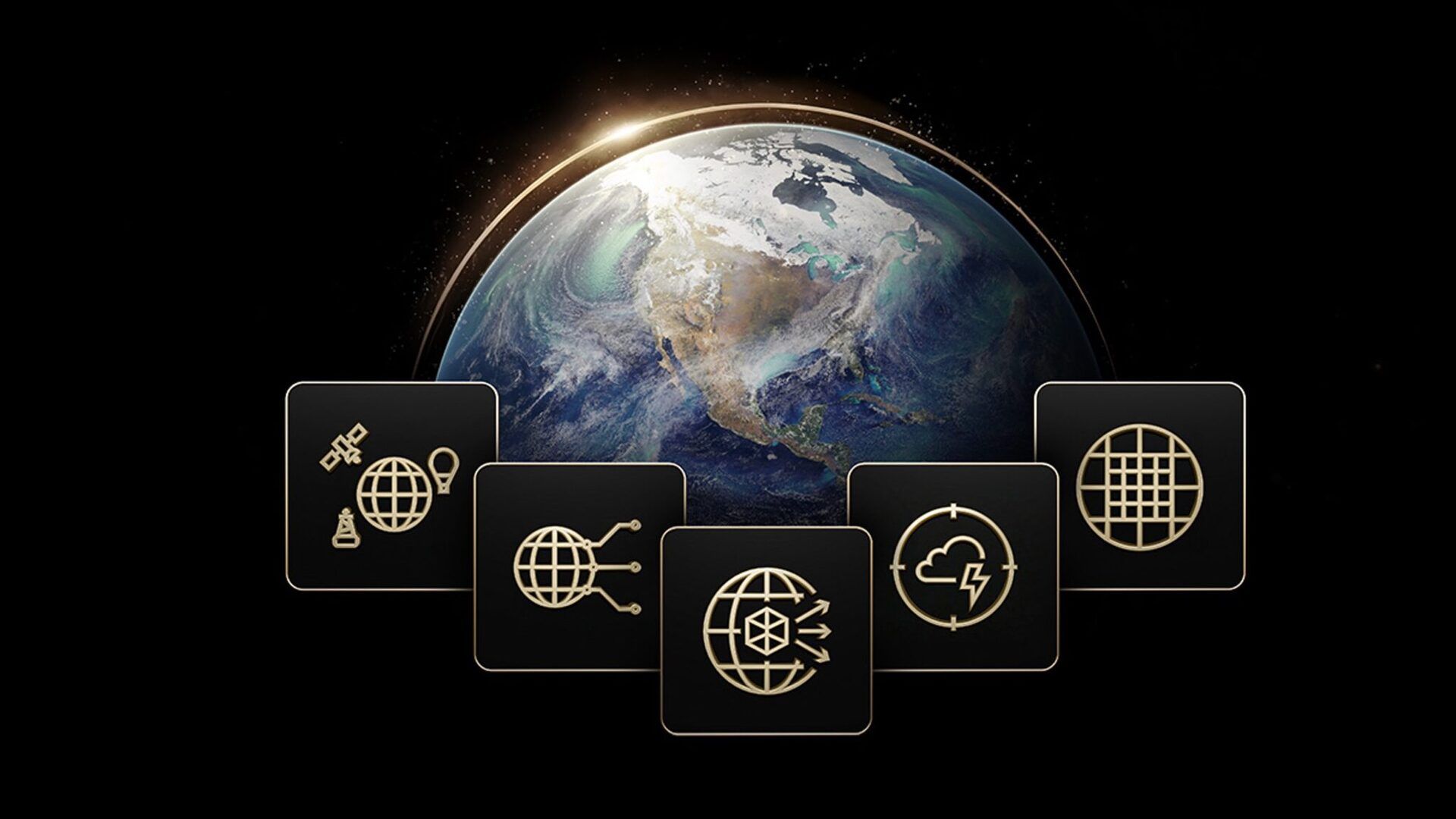
NVIDIA announced a family of open models + libraries + frameworks under Earth-2, pitched as the “first fully open, accelerated weather AI software stack.”
The big idea: weather forecasting has traditionally depended on giant physics-based simulations on supercomputers — but AI models can cut compute time and cost dramatically, making advanced forecasting easier to run on more organizations’ infrastructure.
New models they highlighted:
Earth-2 Medium Range (Atlas architecture): up to 15-day forecasts, across 70+ variables (temperature, pressure, wind, humidity, etc.)
Earth-2 Nowcasting (StormScope): 0–6 hour, kilometer-resolution local storm predictions “in minutes,” trained on satellite/radar data
Earth-2 Global Data Assimilation (HealDA): generates “initial conditions” for forecasts in seconds on GPUs vs hours on supercomputers
They also mention existing open models in the stack (like CorrDiff for downscaling and FourCastNet3), and that Earth-2 integrates open models from groups like ECMWF, Microsoft, Google, and others.
Availability:
Medium Range and Nowcasting are available via Earth2Studio and also on Hugging Face / GitHub (as stated in the post)
Global Data Assimilation is expected later this year
Why this matters: this is NVIDIA doing what it does best — not just “a model,” but an open stack designed to run well on GPUs. If open weather models get good enough and cheap enough, we’ll see them baked into everything from energy trading and grid ops to logistics and insurance risk models.
🧠RESEARCH
SWE-Pruner makes coding AI more efficient by teaching it to "skim" code rather than reading every line. A small helper tool identifies only the necessary parts for a specific task. This reduces the amount of data processed, saving money and time without lowering the quality of the code written.
Memory-V2V gives video-editing AI a "memory" so it remembers previous changes. This fixes a common problem where multiple edits make a video look inconsistent. By referencing past work and compressing data, it ensures style consistency throughout the video while making the editing process significantly faster.
This paper introduces a method for AI research agents to grade and fix their own work while solving problems. By using a strict "rubric" to check answers in real-time, the AI spots its own mistakes. This self-correction boosts accuracy on hard tasks without requiring expensive new training.
🛠️TOP TOOLS
Each listing includes a hands-on tutorial so you can get started right away, whether you’re a beginner or a pro.
Chatbase – Build AI Customer Support Agents Fast - lets you create customer‑facing AI agents (chatbots) trained on your own content, connect them to tools and data, deploy them on your website or messaging channels, and review performance with built‑in analytics.
ChatBCG – Text‑to‑PowerPoint Slide Generator - web app that auto‑generates slide decks from a short text prompt—essentially “text‑to‑PowerPoint.”
Chatbit – AI Chatbots For Your Website - no‑code tool for adding an AI chatbot to your website to answer questions, boost engagement, and capture leads.
📲SOCIAL MEDIA
🗞️MORE NEWS
OpenAI Reportedly Launches ChatGPT Ads OpenAI is introducing ads to the free version of ChatGPT, charging advertisers about $60 for every 1,000 views. This high price matches premium TV slots like NFL games, signaling a push to make money faster.
Nvidia Invests $2 Billion in CoreWeave Chip giant Nvidia is pouring $2 billion into CoreWeave to build massive data centers dedicated to artificial intelligence. This partnership aims to create "AI factories" that will power the next generation of smart technology.
EU Investigates X Over Grok Deepfakes European regulators are probing Elon Musk’s X after its AI tool, Grok, was used to create fake sexual images of people without their consent. The investigation focuses on whether the platform failed to stop illegal content.
OpenAI Aims to Lure Businesses OpenAI is aggressively targeting corporate clients, competing directly with rival Anthropic. While Anthropic focuses on specialized sectors like healthcare, OpenAI is using its massive consumer reach to win over big business contracts.
China Trains AI Weapons Using Animal Tactics Chinese researchers are teaching military drones to hunt like hawks and work together like wolf packs. This "biomimetic" approach aims to make swarms of autonomous weapons more lethal and harder to defend against.
Startup Ricursive Hits $4 Billion Value Ricursive Intelligence, a new company using AI to design faster computer chips, has raised $300 million. This investment values the startup at $4 billion just months after launching, making it an instant industry giant.
What'd you think of today's edition? |
Reply